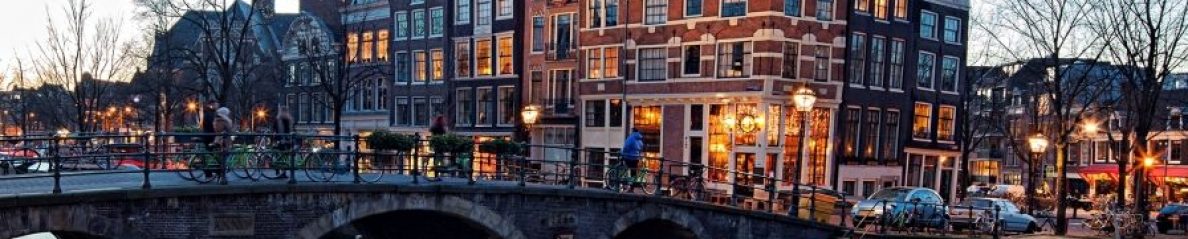
With less than a week until we begin both our trip and study, I thought it was a crucial time to begin to make observations to compare and contrast the differences in the social acceptance of recreational adult entertainment both here in the UK and later on in Amsterdam; a key aspect of our study into the fluidity of morals. With an opportunity for a guided tour of some of Liverpool’s most famous strip clubs, assessing their popularity, their visibility and proximity to other popular ‘normal’ night clubs, and how mainstream they appeared to be, provided me with an idea of how much they were stigmatised or accepted, therefore influencing people’s morals to pursue these activities – either positively or negatively. This was an essential experience, both personally and for my research, as it gives me some context and level of familiarity when pursuing my research abroad; providing me with a foundational understanding of the nightlife process, and allowing me to be more accurate when studying similar locations and their differences elsewhere with greater understanding.
Throughout the tour we visited several different locations. I was able to make notes and take photographs to document the experience throughout in order to keep my observations accurate and increase the validity of my short study. These will be referred to and displayed throughout the post.
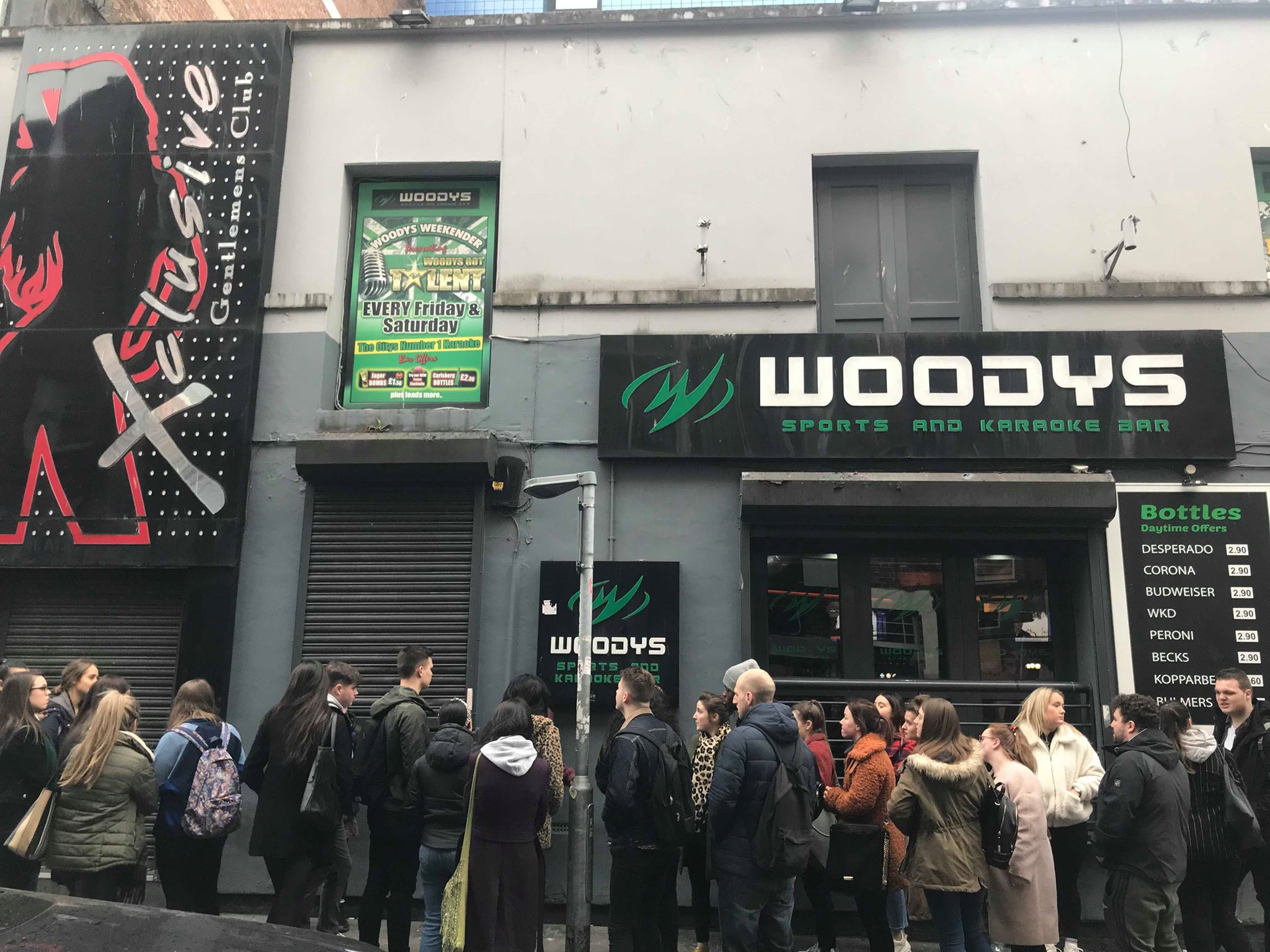
Firstly we visited ‘Xclusive Gentlemans Club’. This sits next door to ‘Woody’s’ karaoke bar, and is seemingly fairly dependent its customers (through which it attracts a lot of). Xclusive itself has a small entrance, less marketing than many of the popular ‘normal’ clubs that it sits away from and is not as independent as the other bars that we witnessed. Although fairly obvious being attached to an already popular bar, other people on the tour exclaimed that they never knew of its existence. Perhaps this is due to it being overshadowed or the fairly secretive entrance.
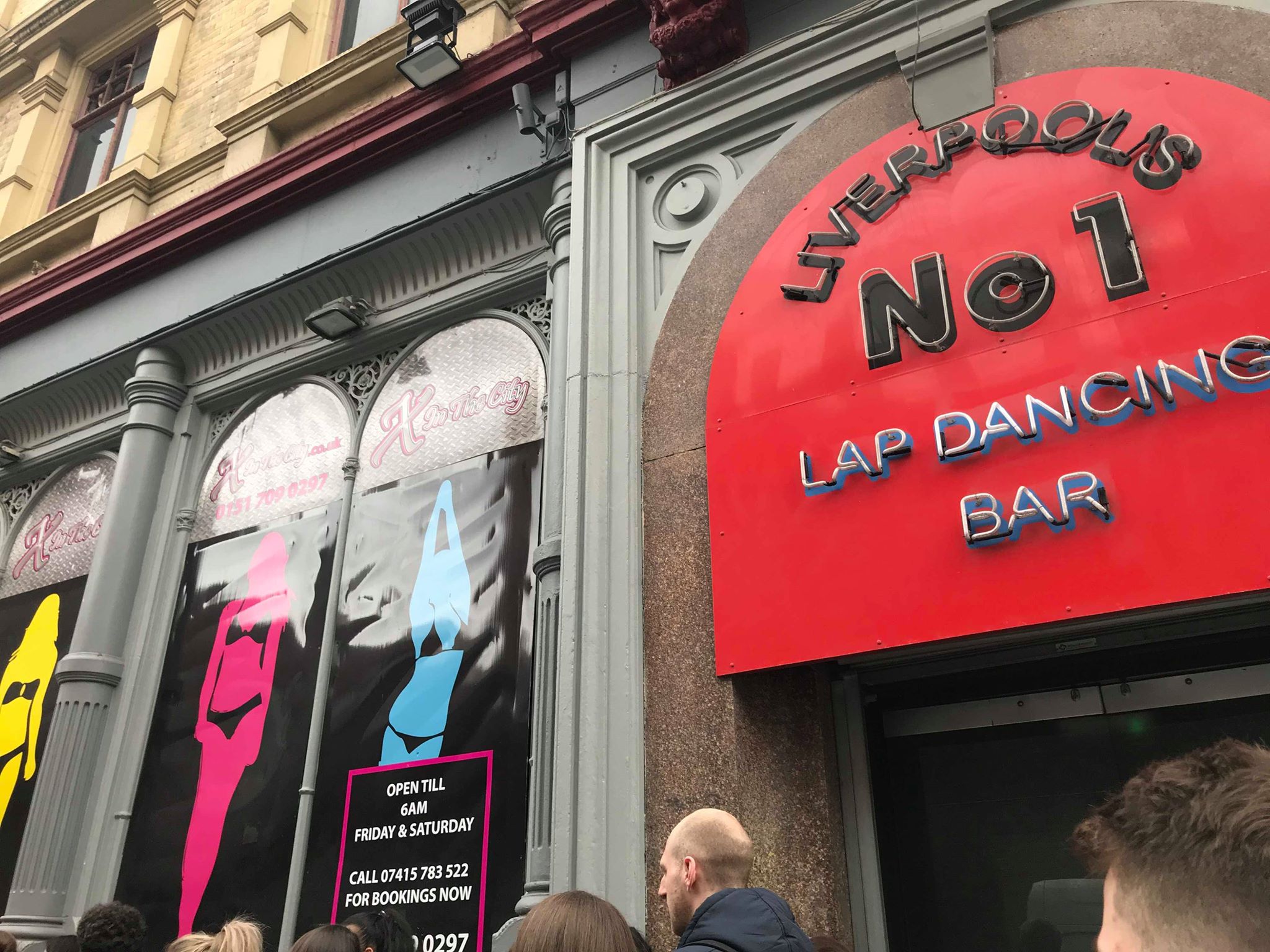
Out of the strip clubs we visited, ‘X in the City’ was perhaps the most obvious. Is sits at the end of a busy Liverpool street which houses numerous other bars, however this was not always the case. Our guide explained that X in the City used to be housed on a popular central street in the centre of Liverpool, however it was surrounded by public sector and commercial buildings, warranting complaints by the public for its removal. This demonstrates the stigma attached to venues like X in the City, seemingly degrading an area for being unrepresentative and immoral. The opening of X in the City was grand, and seemed much bigger and hubristic than its competitors, boasting its “Liverpool’s No 1” status.
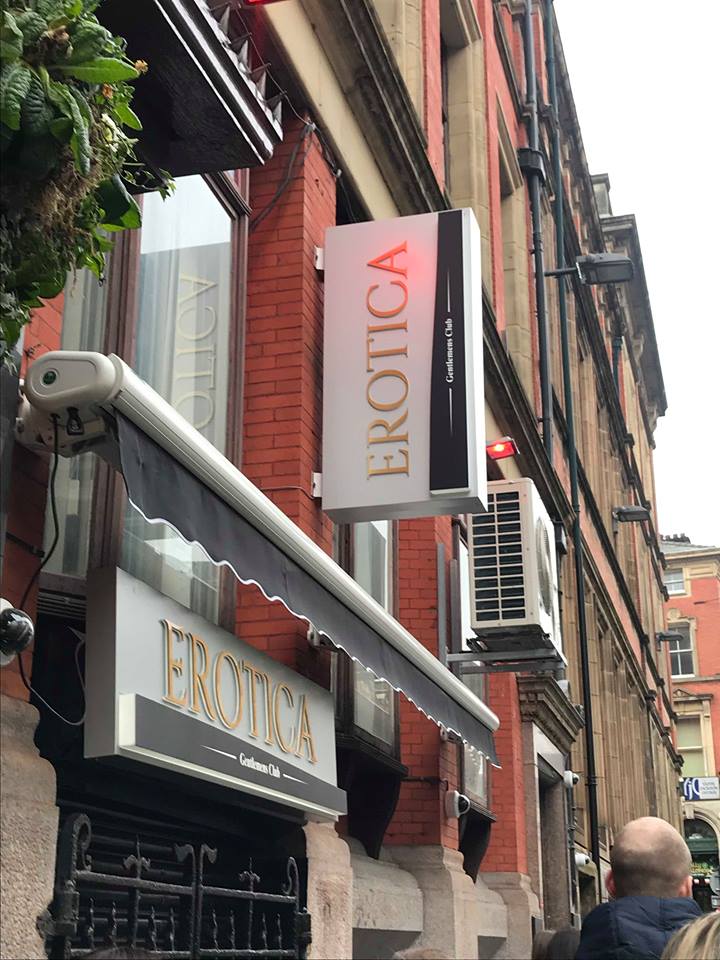
Thirdly, we visited ‘Erotica Gentleman’s Club’. Unlike the other strip clubs we visited, this was importantly titled a ‘Gentleman’s Club’, warranting it a sense of class and dignity. Due to its discretion, minimal marketing and modest appearance, Erotica was more central to Liverpool’s commercial district and away from otherwise popular and eccentric bars. This is also reflective of its clientele, which is characterised as much less stigmatised and largely sophisticated.
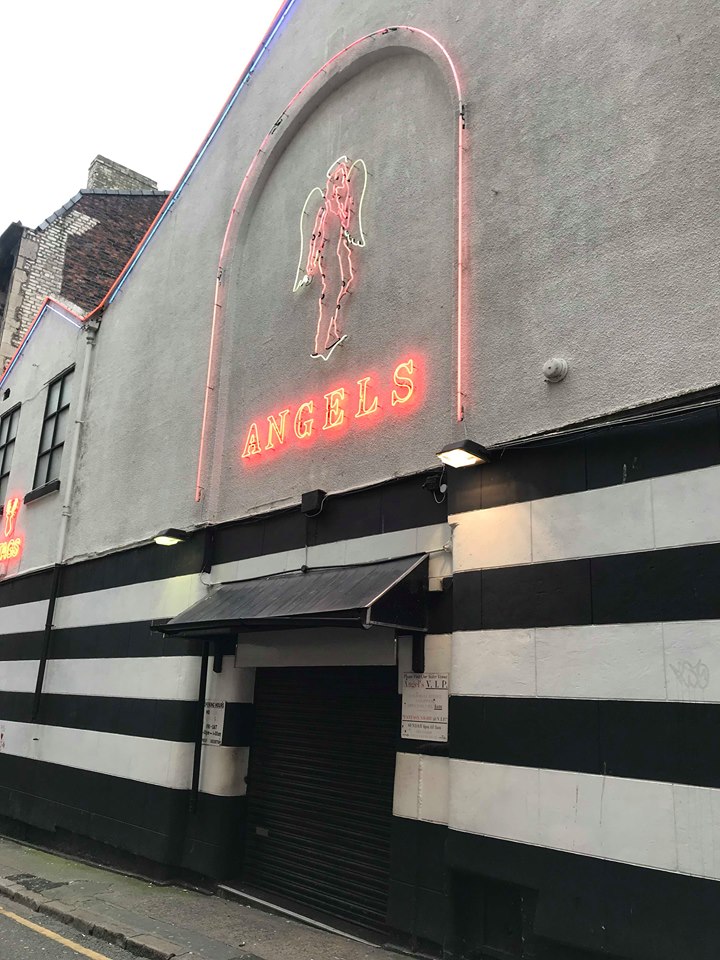
Last on our tour, we visited ‘Angel’s’. One of Liverpool’s oldest strip clubs, this venue is situated in a very hidden and largely secluded area of town. This may be reflective of the changing attitudes and leniency towards newer strip clubs as they gradually emerge closer to popular nightlife areas. From the location of this club, it is obvious that any clients who seek out this venue do so with intent, unlike the other clubs we visited, which can be arguably enjoyed as a more novel and last minute experience.
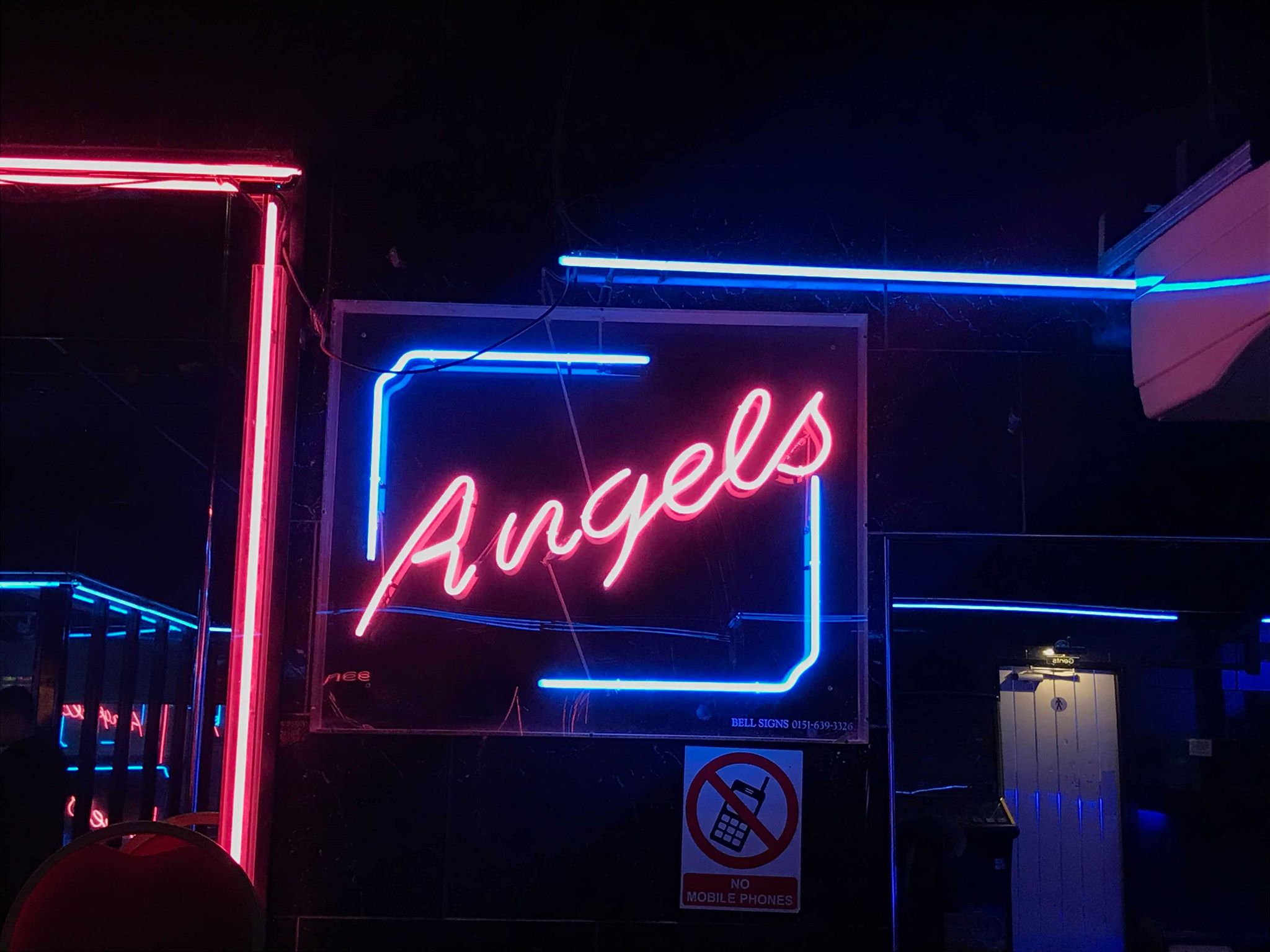
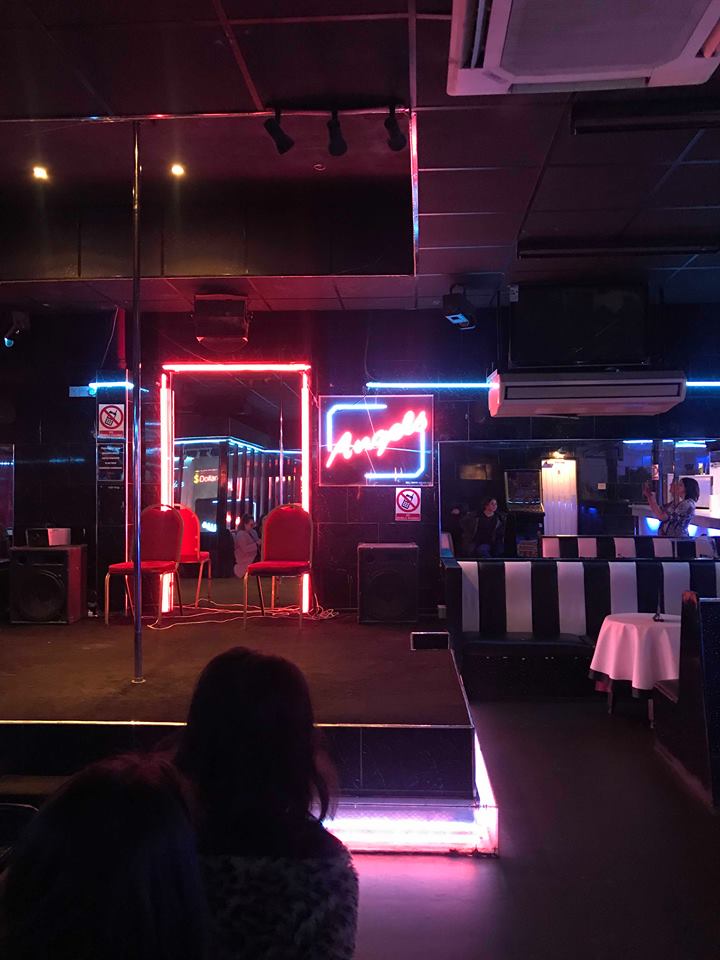
Unlike the other clubs, we were granted access into Angel’s which allowed for an assessment of the interior set up and discussion of a typical night in Angel’s, including the processes that occur and the activities that can be expected to take place. Our guide explained that the club is organised into a particular format to benefit the women who work there. This includes a requirement for clients to be constantly sitting unless buying a drink or asking for a dance, prioritising the women’s safety at all times and creating a power balance that grants the women full security and authorship over club. This is reinforced by security guards and CCTV, creating an atmosphere of authority for the workers that I wouldn’t have thought existed prior to the tour. It will be interesting to witness how this power balance is applied in Amsterdam, and how the processes of the club differ also.
To conclude, the tour was a enlightening experience. It allowed me to gather a feel for how to adult entertainment business operates within the UK, prioritising respect and authority for the women who work within it, whilst creating a feeling of stigma for the clients who pursue it seriously. This is due to the widespread and often distant concentration of strip clubs which operate in different parts of the city, often in secretive and discreet locations. The visibility of the clubs was interesting to note, and the intersectionality between obviousness and elegance in relation to location was another interesting paradigm.
 Whose Law is it Anyway?