Research Conclusions

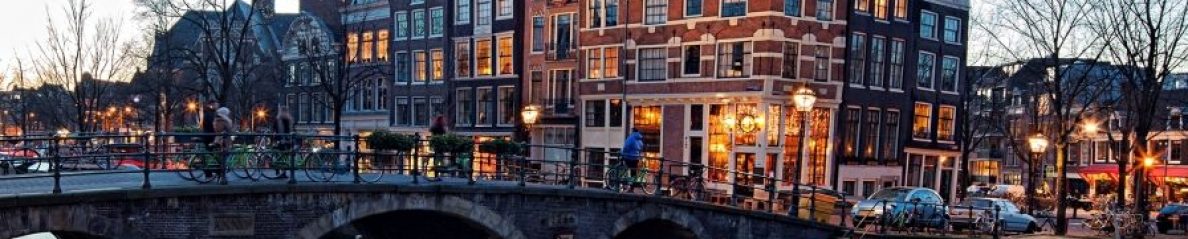
Amsterdam presents itself as a bilateral city. In one sense, its rich history, culture and customs are ingrained within the city’s archaeology, atmosphere, traditions and ordinance, however there is a much more infamous aspect that attracts tourists from around the globe who flock to experience and exploit the blase attitudes of the city in relation to drugs, sex and alcohol consumption for their own benefit. This undermines the city and its traditional values, however for many, it is the only reason they want to experience it.

From the research conducted, participants generally disagreed with the acts of heavy drug use, engaging with the sexual industry, and frequent alcohol consumption, so why then when in Amsterdam did they feel the necessity in indulging in these activities when they would not do so at home? Although previous research has been conducted on the matter, as a group, we wished to discover this first hand.

Drug use, specifically the use of recreational cannabis for many was a priority when in the city. For some, it was the only reason they came. Although many did not smoke at home for moral reasons, the adaptation in legislation and relaxed moral consensus of social attitudes towards it changed participants opinions on the matter. It seemed that there was a direct link between legal opinion and the personal opinion of those subjugated to it, in a sense, if the law says it is okay, then it must be. This was the case for a number of participants who admitted to smoking daily, and much more frequently than they usually would.

Many had a lack of experience, and the legal aspect of being able to buy pre-made “joints” and consult advice from specialists also encouraged their usage. For some participants, they had only smoked for the first time in Amsterdam due to its availability as they “don’t even know where to find it”.

Involvement within the sex industry was also very popular among participants. This was typical of one group who were visiting Amsterdam on a stag do. Although they hadn’t engaged with any sex work at home, they had frequently whilst abroad. This was due to the fact it was “just a laugh”, reiterating the ideas of previous blog posts that much of the traffic in sex shows from tourists relies on the concept that it is a novelty rather than a serious endeavour.

Although some had attended strip clubs before, referred to as a “strippy”, it was argued that it was “weird at home”, again, symbolising the social acceptance and its influence on morality when abroad in justifying self indulgence.

Based on observations of similar student groups abroad, the consumption of alcohol was much less inhibited with justifications of being on holiday. This saw it indulged in excess, and free from the stigma it would typically grant.
Establishing Comparisons and the Creation of Context: A Guided Tour of Amsterdam’s Red Light District

Having returned from our trip to Amsterdam and conducting our research intro tourist morality, all that is left to do now is conduct the final report and blog our experiences. The best way to begin this however, is by detailing my comparisons to Liverpool and our guided tour of strip clubs a week before we arrived in Amsterdam. This will help by assembling context to the study and better understanding any cultural expectations both here and abroad.

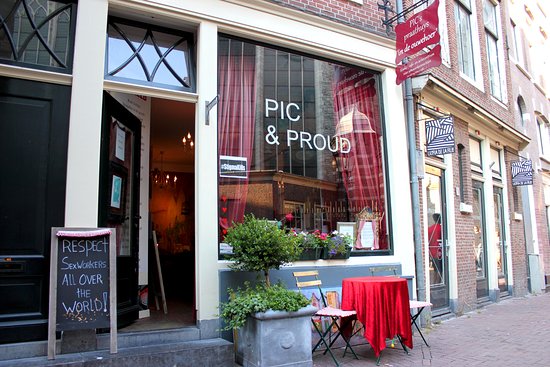
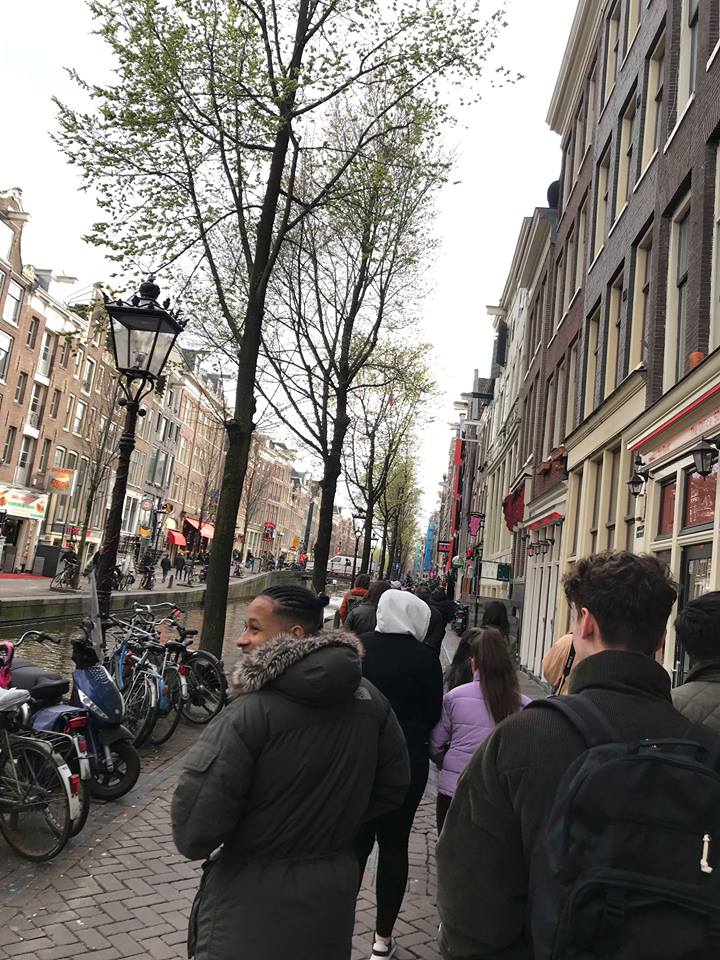
Whilst we were away, we were lucky enough to embark on a guided tour of the city’s famous Red Light District with the Prostitute Information Centre. This meant that we were able to benefit from accurate and reliable information through out the tour, and ask questions that would be accurately answered.

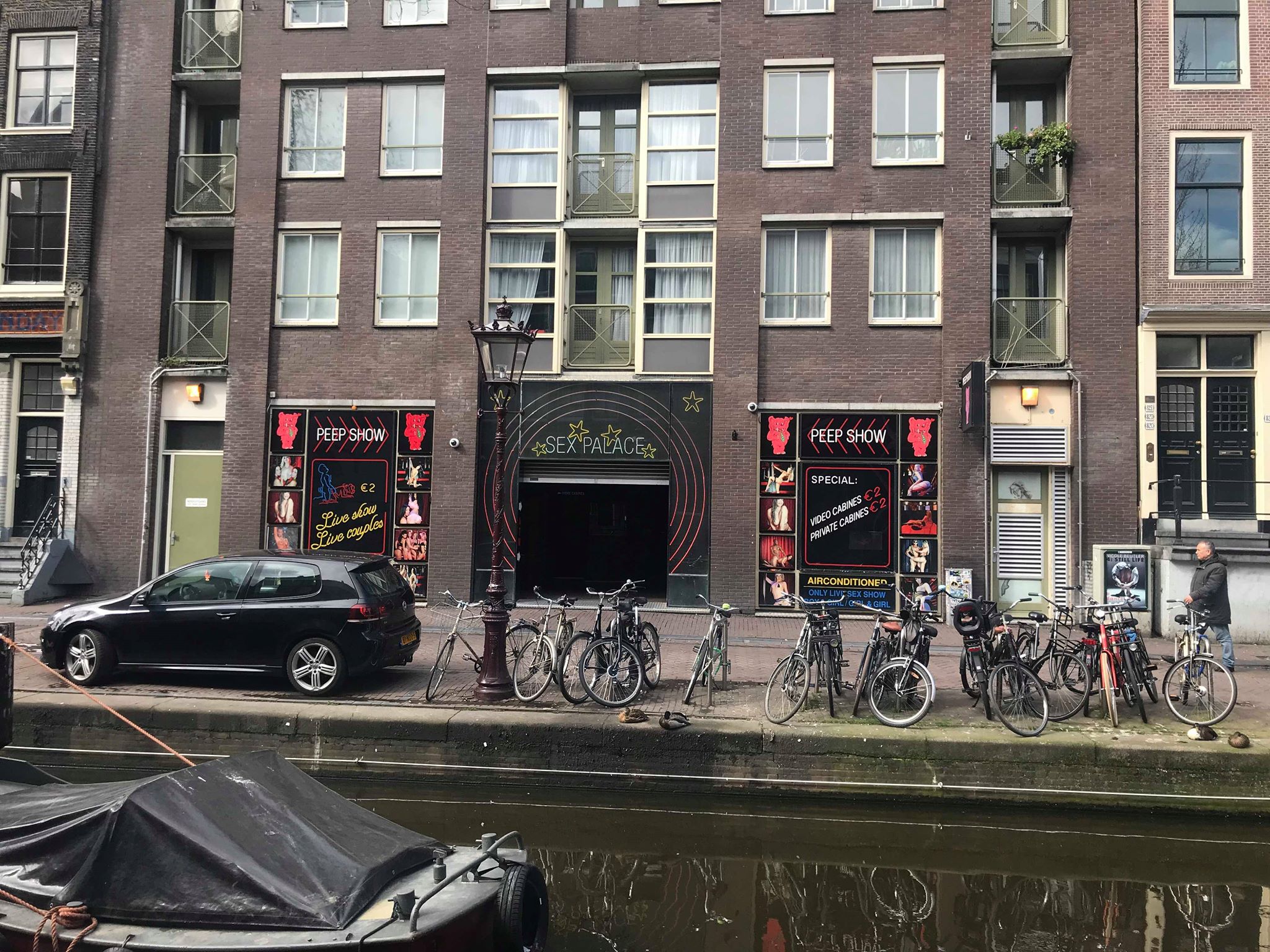
It was immediate that the sex industry was far more welcomed in Amsterdam than in Liverpool. Sex shops, museums, sex shows and prostitutes lined the streets, integrated into the standard structure of the houses and casually sitting next to pubs, cafes and other commercial buildings. Sex sells, and this was definitely the case through out the city. It was by far the norm and very much welcomed – the direct opposite of Liverpool which shuns even strip clubs, disguising them through monotone advertising and suggestive club names.

This was not the case in Amsterdam however, as bold, loud and stand-out lights and signs advertised peep and sex shows to passers-by who commonly entered without hesitation or fear of stigmatisation. This was interesting to witness, especially since in Liverpool there seems to be a grounded fear of stigmatisation to enter a casual strip club, which is far removed from the intensity and far more erotic nature of a live sex show. Perhaps this was to do with the assumption that those who engaged with these activities did so out of novelty, as those inside seemed to be curious rather than experienced or having serious expectations.

Throughout the Red Light District, although there were plenty of sex shows there was a lack of standard strip clubs. This point was raised to one of the guides on the tour who stated that “there is no need for them and there exists no market to accommodate them either”, she added, “why would you want a tease when you can have the full experience?” This was definitely in regards to the ease of access to prostitutes in the area through either brothels or the red light lined windows. Costing around the same price as a lap dance in Liverpool, it is clear that there is little demand for them in a city as sexually promiscuous and open as Amsterdam.

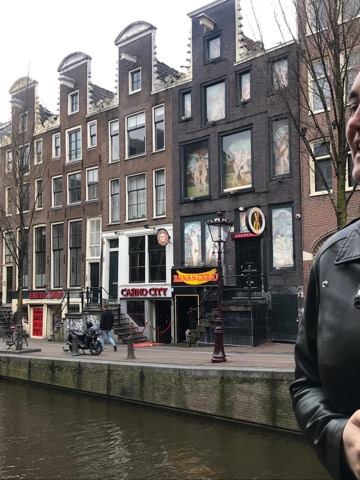
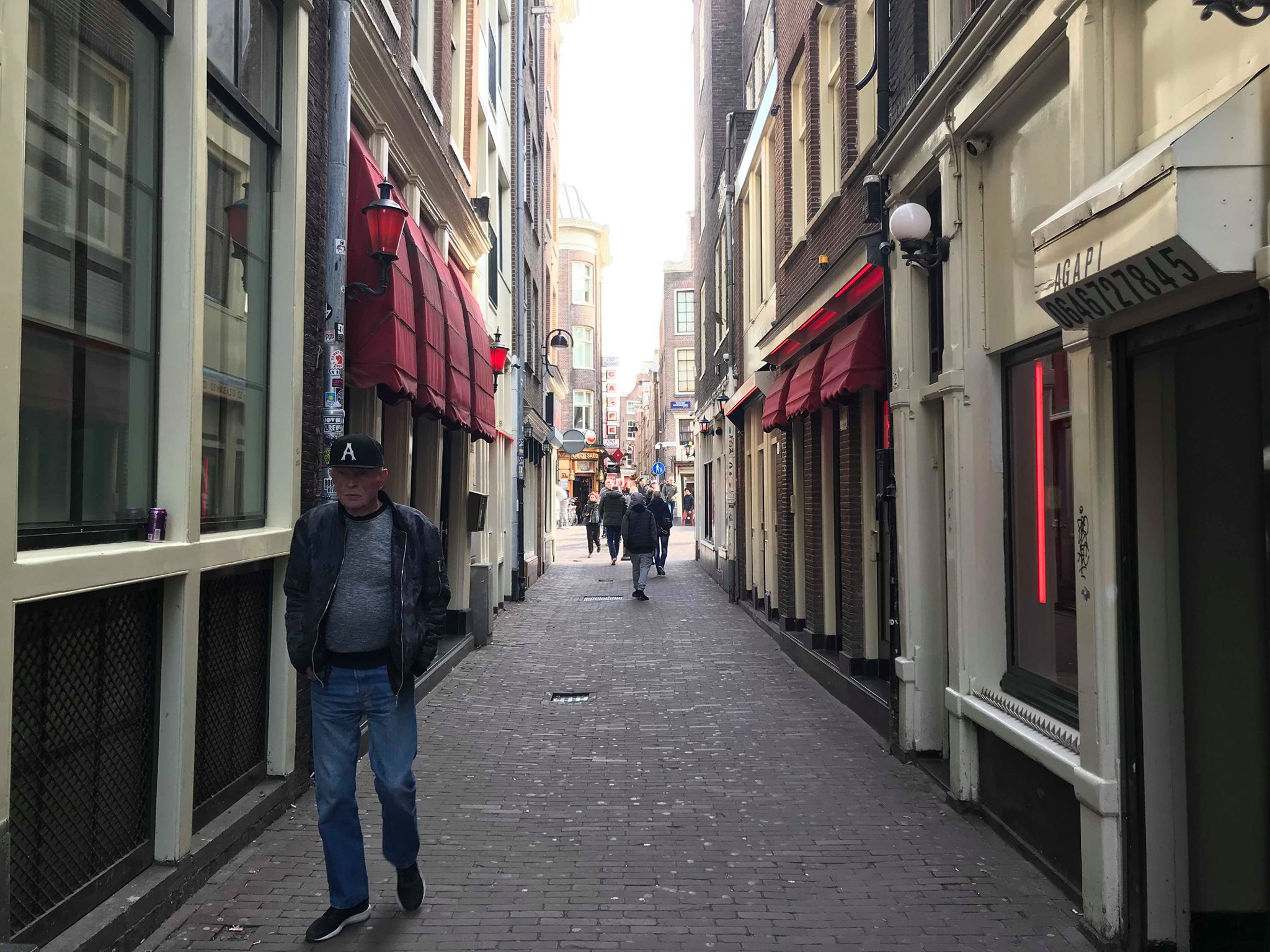
The red lights lined the streets at every turn, with girls of every ethnicity and age waiting to be chosen. It truly was a surreal experience, especially coming from a culture as reserved as in the UK. In a sense it was amusing to witness, it was a novelty until we actually witnessed people freely entering and exiting the doors, negotiating prices and making use of the facilities. It was at this point that it sank in that this was a real market. In a strange way it hadn’t hit me that people made use of these services for legitimate reasons, maybe from the expectations I had coming from the more novelty peep shows we had visited earlier. These, much like the previous shops sat next to homes, shops and other buildings – and nobody batted an eyelid. It seems that locals were completely desensitised which was the complete opposite of tourists we encountered, including ourselves. As soon as it is legal, regulated and commercialised, it simply becomes the norm. The girls behind the window, much like the strippers here in Liverpool were prioritised in terms of safety. They had control of their business fully, from choosing their customers, to security on call and even only having a one way window from the inside out to prevent a customer entering unwelcomed. This was relieving to see, and was one of the only similarities to Liverpool and other strip clubs in the UK – that the workers had authority and not the other way around.

Establishing Comparisons and the Creation of Context: A Guided Tour of Liverpool’s Strip Clubs

With less than a week until we begin both our trip and study, I thought it was a crucial time to begin to make observations to compare and contrast the differences in the social acceptance of recreational adult entertainment both here in the UK and later on in Amsterdam; a key aspect of our study into the fluidity of morals. With an opportunity for a guided tour of some of Liverpool’s most famous strip clubs, assessing their popularity, their visibility and proximity to other popular ‘normal’ night clubs, and how mainstream they appeared to be, provided me with an idea of how much they were stigmatised or accepted, therefore influencing people’s morals to pursue these activities – either positively or negatively. This was an essential experience, both personally and for my research, as it gives me some context and level of familiarity when pursuing my research abroad; providing me with a foundational understanding of the nightlife process, and allowing me to be more accurate when studying similar locations and their differences elsewhere with greater understanding.

Throughout the tour we visited several different locations. I was able to make notes and take photographs to document the experience throughout in order to keep my observations accurate and increase the validity of my short study. These will be referred to and displayed throughout the post.

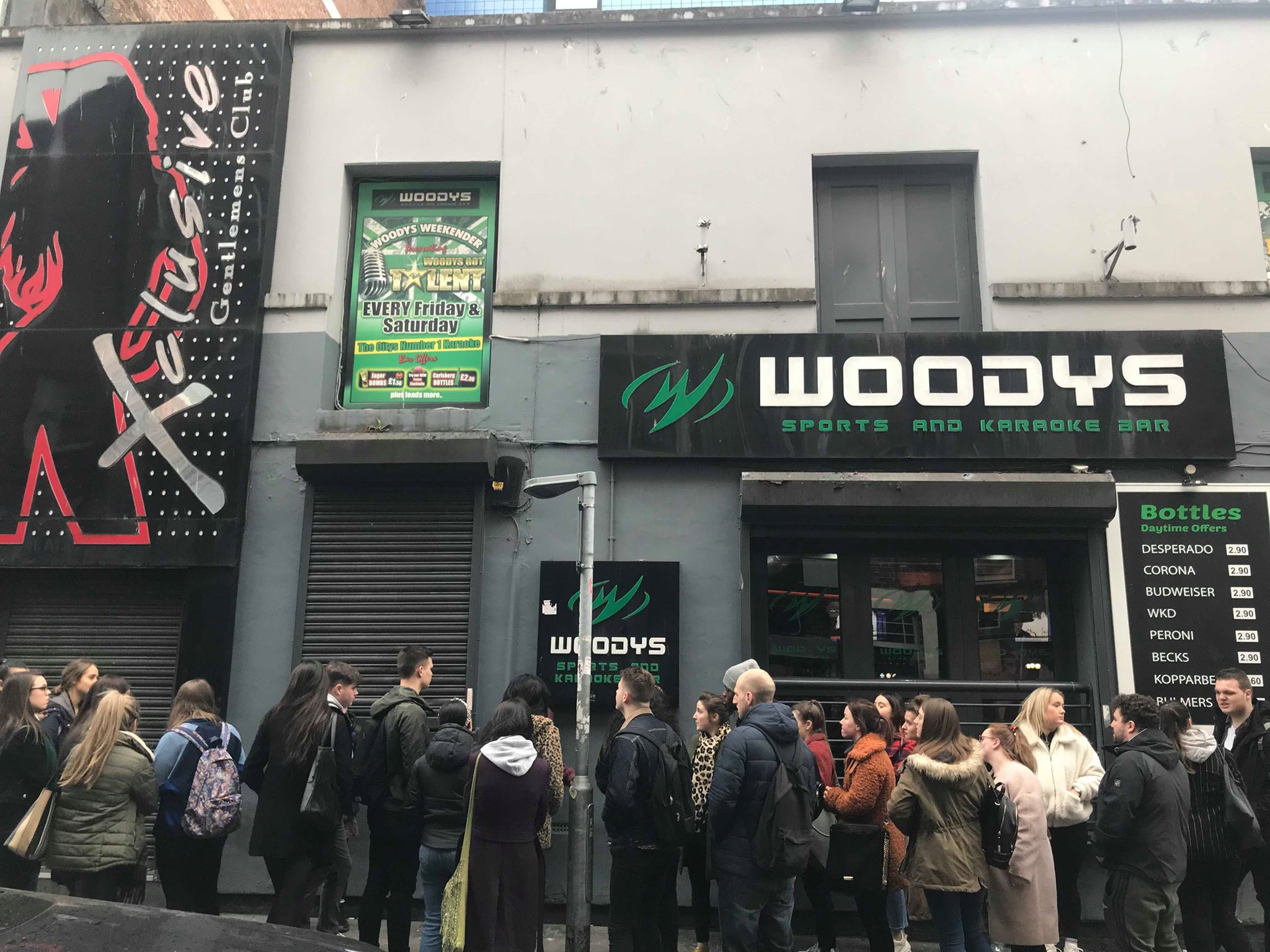
Firstly we visited ‘Xclusive Gentlemans Club’. This sits next door to ‘Woody’s’ karaoke bar, and is seemingly fairly dependent its customers (through which it attracts a lot of). Xclusive itself has a small entrance, less marketing than many of the popular ‘normal’ clubs that it sits away from and is not as independent as the other bars that we witnessed. Although fairly obvious being attached to an already popular bar, other people on the tour exclaimed that they never knew of its existence. Perhaps this is due to it being overshadowed or the fairly secretive entrance.

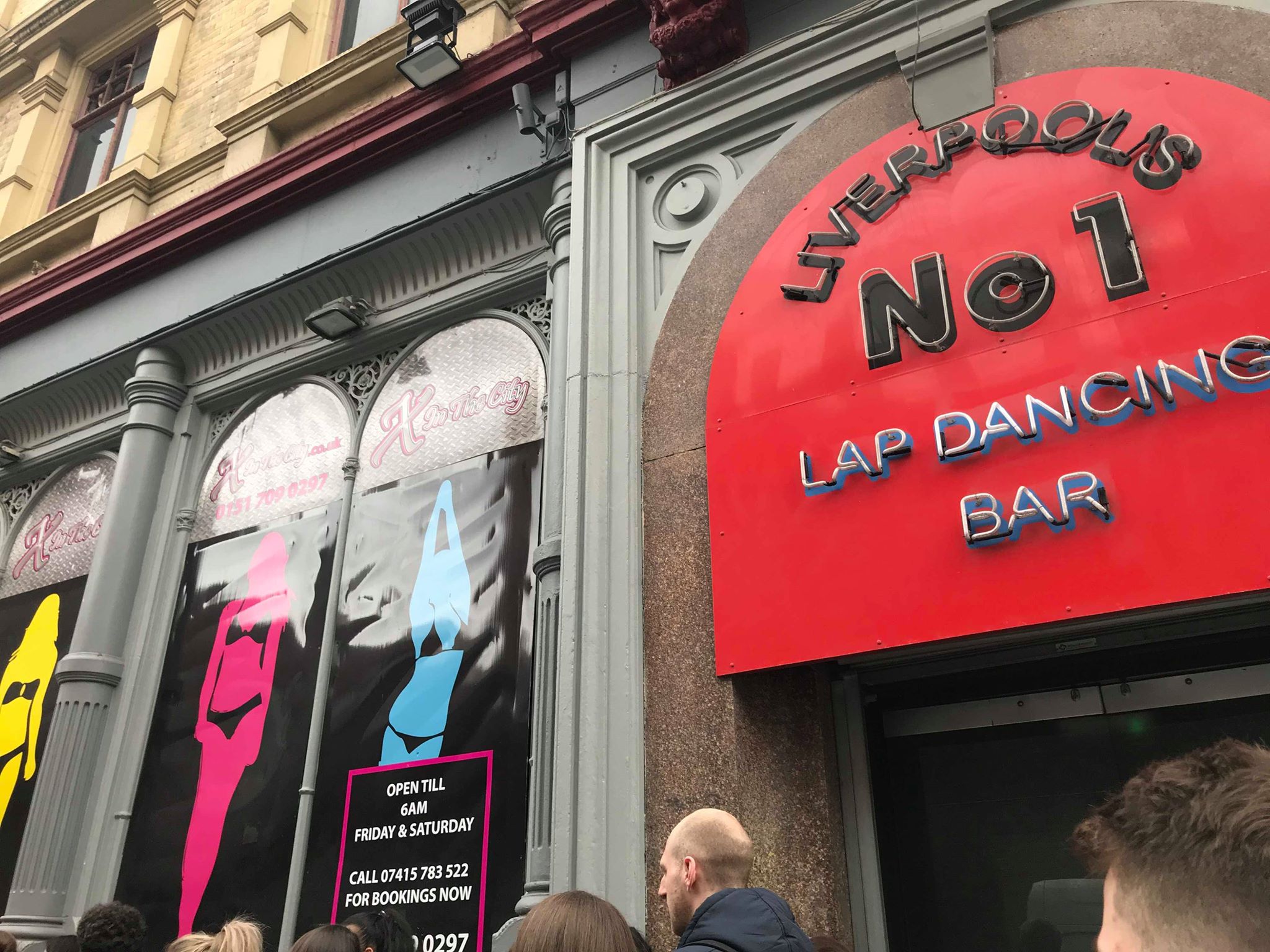
Out of the strip clubs we visited, ‘X in the City’ was perhaps the most obvious. Is sits at the end of a busy Liverpool street which houses numerous other bars, however this was not always the case. Our guide explained that X in the City used to be housed on a popular central street in the centre of Liverpool, however it was surrounded by public sector and commercial buildings, warranting complaints by the public for its removal. This demonstrates the stigma attached to venues like X in the City, seemingly degrading an area for being unrepresentative and immoral. The opening of X in the City was grand, and seemed much bigger and hubristic than its competitors, boasting its “Liverpool’s No 1” status.

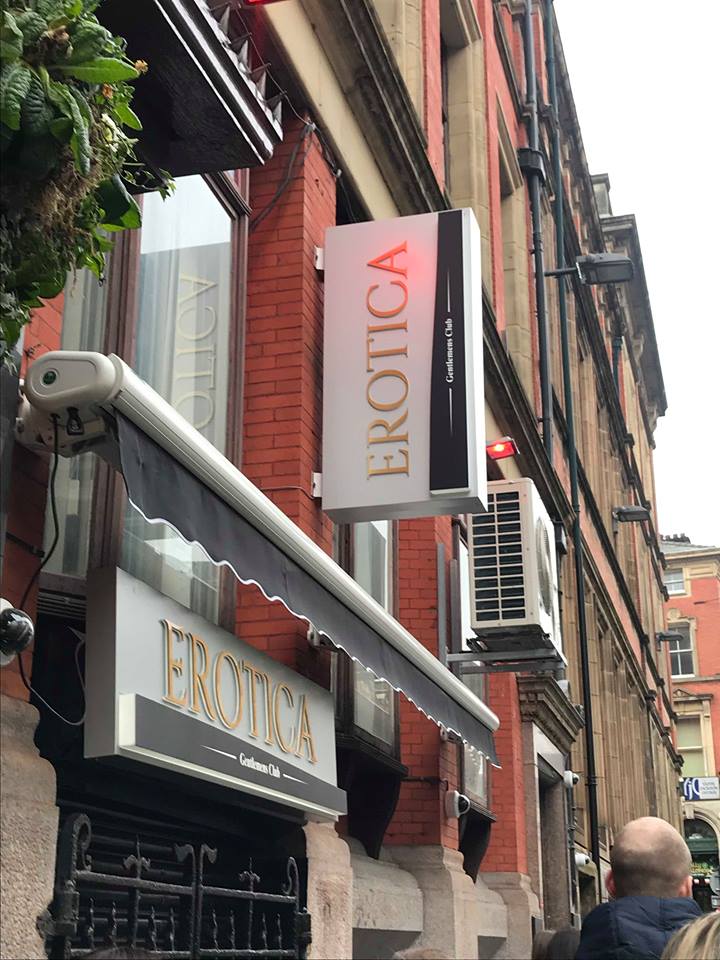
Thirdly, we visited ‘Erotica Gentleman’s Club’. Unlike the other strip clubs we visited, this was importantly titled a ‘Gentleman’s Club’, warranting it a sense of class and dignity. Due to its discretion, minimal marketing and modest appearance, Erotica was more central to Liverpool’s commercial district and away from otherwise popular and eccentric bars. This is also reflective of its clientele, which is characterised as much less stigmatised and largely sophisticated.

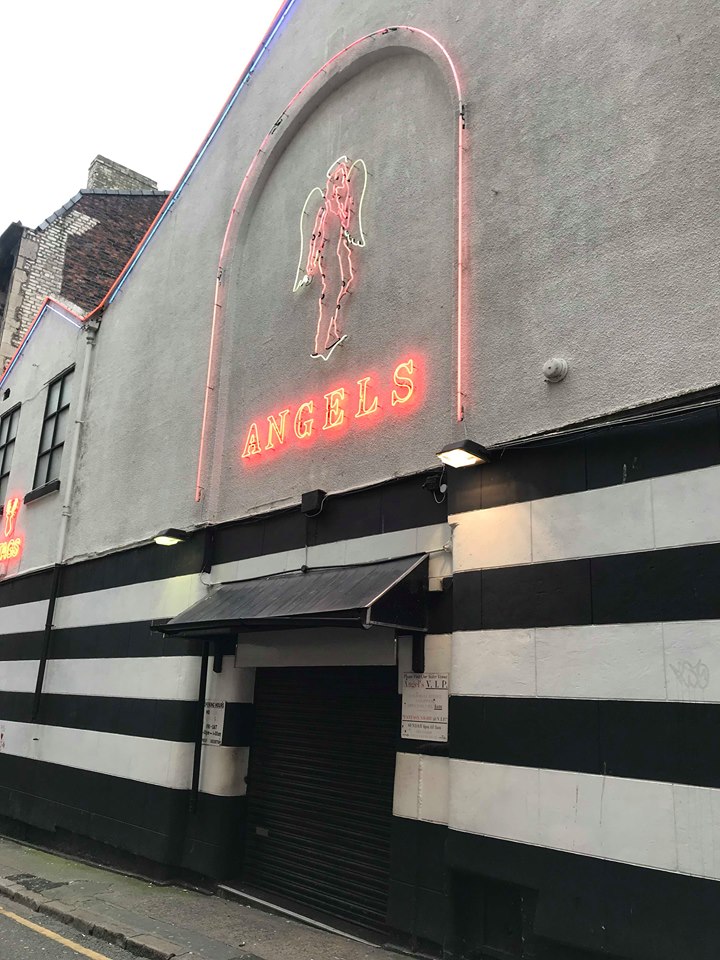
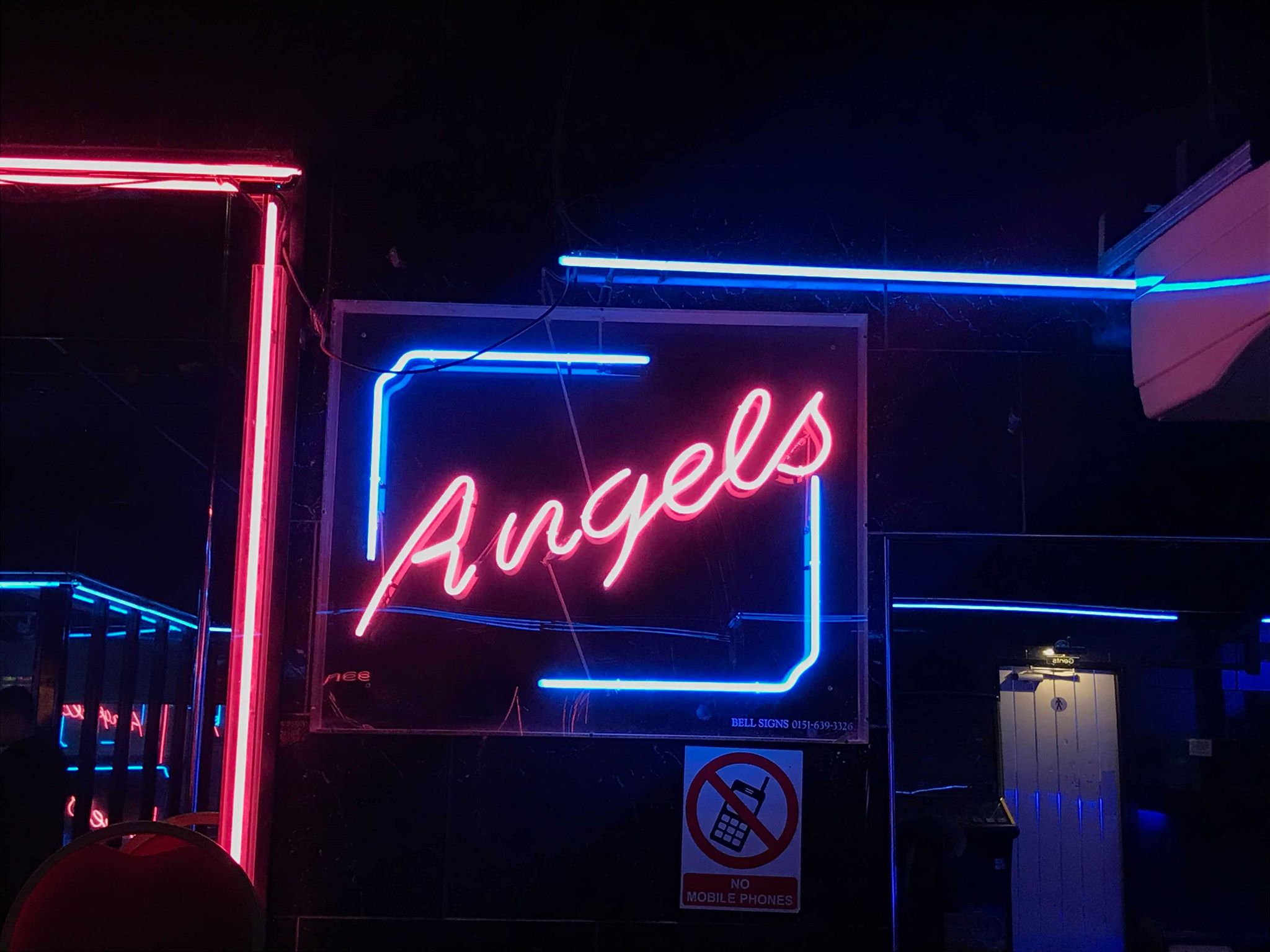
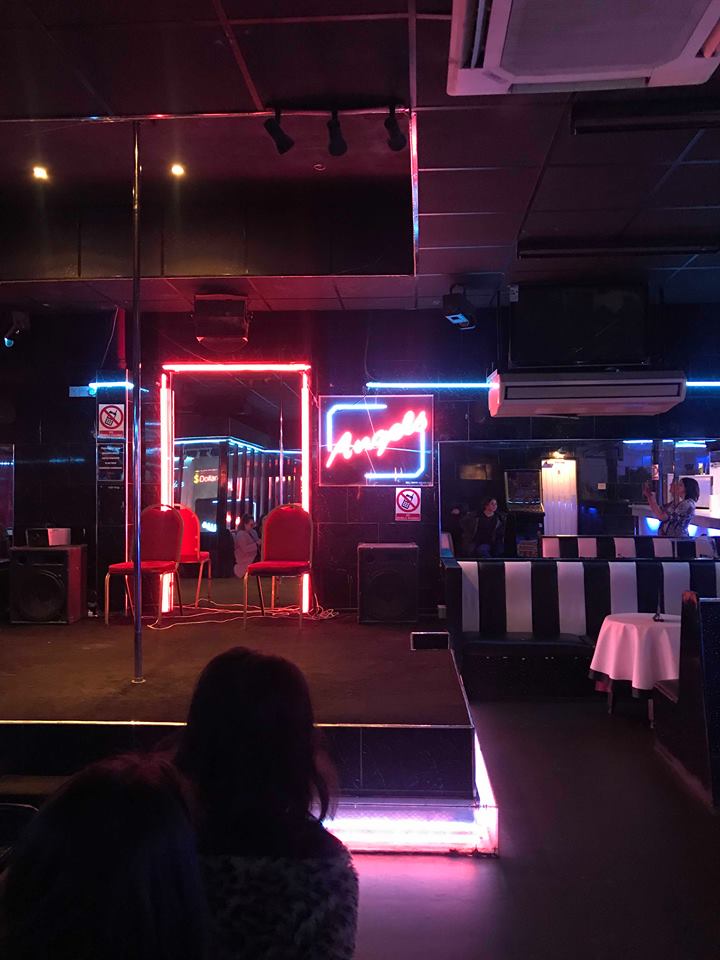
Last on our tour, we visited ‘Angel’s’. One of Liverpool’s oldest strip clubs, this venue is situated in a very hidden and largely secluded area of town. This may be reflective of the changing attitudes and leniency towards newer strip clubs as they gradually emerge closer to popular nightlife areas. From the location of this club, it is obvious that any clients who seek out this venue do so with intent, unlike the other clubs we visited, which can be arguably enjoyed as a more novel and last minute experience.

Unlike the other clubs, we were granted access into Angel’s which allowed for an assessment of the interior set up and discussion of a typical night in Angel’s, including the processes that occur and the activities that can be expected to take place. Our guide explained that the club is organised into a particular format to benefit the women who work there. This includes a requirement for clients to be constantly sitting unless buying a drink or asking for a dance, prioritising the women’s safety at all times and creating a power balance that grants the women full security and authorship over club. This is reinforced by security guards and CCTV, creating an atmosphere of authority for the workers that I wouldn’t have thought existed prior to the tour. It will be interesting to witness how this power balance is applied in Amsterdam, and how the processes of the club differ also.

To conclude, the tour was a enlightening experience. It allowed me to gather a feel for how to adult entertainment business operates within the UK, prioritising respect and authority for the women who work within it, whilst creating a feeling of stigma for the clients who pursue it seriously. This is due to the widespread and often distant concentration of strip clubs which operate in different parts of the city, often in secretive and discreet locations. The visibility of the clubs was interesting to note, and the intersectionality between obviousness and elegance in relation to location was another interesting paradigm.

Developing the Study: Our Proposal

During the development of the study, as a group we were able to construct a strong proposal which sought to cover our aims, our inspiration (literature review), our methodology and our ethics.

By grouping each element of our study into one continued proposal, this makes our research easier to understand, provides accurate context and also makes it easier for us, as a group to reflect back on our own work. To provide a feel for our proposal, an extract of my own contribution (our methodology) is presented below:

“With the intention of gathering data regarding how tourist morality is influenced by law, the process of gathering valid data in a suitable manner respectful of ethical considerations and appropriate context is critical within such a study.

When designing the research and comparing other pieces of literature on the topic, notable issues were addressed. These shaped our research question and allowed us to consider our content further. These were:

1.            Addressing the philosophical concept of what we were defining as ‘morality’, as the fundamentals of what this encompasses were discussed. The concept of morality was particularly difficult to operationalise, however consulting relevant literature and creating a standardised definition that remained consistent across the study benefitted us in maintaining an objective study whilst considering ‘morality’ and other broad, subjective concepts.

2.            Considering ontology and subjectivity of participants. By discussing the issue of ontological security, we became aware that people may decide to favour certain answers to fit their sense of order or bias. Giddens (1991) was consulted, who referred to ontological security as a stable mental state, derived from continuity in a person’s life. This was considered in our own study, as we became aware that people may be biased towards their perceived sense of morality that they believed to be ‘true’ to fit a personal philosophical agenda.

When undertaking any form of qualitative social research, it is also important to consider the interpretivist approach, and its underlying philosophy within the social world. Cao Thanh (2015) explains a close connection between the interpretivist paradigm and qualitative methodology, justifying its importance in employing qualitative methods to study social phenomena. This is explained using an interpretive paradigm to utilise unique studied experiences to interpret and construct valid understanding from gathered data. This justifies our own use of qualitative methods, as it is argued that more quantitative methods neglect the importance of subjective experience and the holistic qualities that come with interpreting expressed thoughts and feelings.

We began assessing methodology through careful consideration of the best suited techniques in relation to gathering the most valid data possible. In relation to interpretivist philosophy we believe that the best suited research technique would involve the use of qualitative, semi-structured interviews.

When considering the use of this technique, its core features ran parallel to our own aims. We therefore decided that the use of qualitative interviews would produce the most valid and representative results for our area of study. These included:

  1. The interactional exchange of dialogue
  2. A thematic, topic-centred, biographical or narrative approach where the researcher has topics, themes or issues they wish to cover, but with a fluid and flexible structure.
  3. A perspective regarding knowledge as situated and contextual, requiring the researcher to ensure that relevant contexts are brought into focus so that the situated knowledge can be produced. Mason (2002:67)

By gathering data using standardised semi-structured interviews within a repeated measures design to gain moral understanding amongst 5 British tourists both within the UK and then abroad to assess changes in attitudes, we retain the ability to maintain a practical and ethically considerate framework whilst gathering rich and in-depth knowledge of our participants, producing an accurate snapshot of contemporary attitudes within a natural setting. This data can then be coded to assess any trends and themes. Although this research methodology paired with the employment of qualitative techniques sacrifices high rates of generalisability, objectivity and reliability, we are able to prioritise a highly valid and holistic study, and one that embraces the importance of subjectivity. We also plan to interview a further 5 independent UK tourists in Amsterdam to assess whether their morality has also been influenced.

With intentions to establish a valid study, we ensured that the sampling method represented the values of our required outcome. To enhance representativity and minimise bias (without sampling error), the most appropriate method of sampling was the use of an opportunity sampling strategy. Using this method, we can fairly represent each of our participants within a naturally occurring group. As our target population is tourists, this sampling strategy is also very constructive due to ease of access, lack of monetary constraints and time efficiency.”

Although this is just one section, it is crucially important to clearly state what we intend to do within our field work project, and ensure it is as accurate as possible.

Developing the Study: Insight into Relevant Research

When creating an accurate and representative study, it is essential to gather and interpret existing literature on similar or related content to that of our own study. This is important to construct a foundational understanding of the themes, contexts and concepts we may have to discuss within our own research. Below are two articles I found especially interesting to relate to our study which provide us with a greater understanding of some fundamental concepts including the law and its relationship to morality.

Green, L. C (1970) Law and Morality in a Changing Society. The University of Toronto Law Journal, 20 (4) pp. 422–447.

Within this article, Green ponders on the relationship between definitions and interpretations of a societies established ‘laws’, and how it influences a generalised sense of ‘morality’ for those governed by these laws.

Within the article, Green recognises that there is no hierarchy in international law; one countries morality surrounding the enforcement of law is no better than another – it is just assumed necessary for that country’s notion of ‘orderly conduct’. This means that law and morality should not be judged from a prejudiced and ethnocentric perspective, there is not one ‘true’ construct of law – it depends on a country’s individuality of right/wrong and what is deemed most appropriate to the functioning of their unique social order.

He also argues that morality is shaped by law that one is exposed to. He argues that from a functional point of view, law may be regarded as the means by which society ensures that its mores are protected by its institutions. This means that a hardening of society’s concept of right and wrong shape an accepted code of behaviour, relative to that place.

This article may be beneficial to the study through the assessment of bias in a travellers interpretation of law. Morality may be arguably separated from the objectivity of law as what is immoral in one country may not be considered immoral in another. Morality can therefore be viewed as a fluid concept with no objective grounding in ‘right’ or ‘wrong’.

Walker, N. and Argyle, M. (1964) Does the Law Affect Moral Judgements? The British Journal of Criminology, 4, (6) pp. 570–581

Within this article, both Walker and Argyle use a range of theoretical understandings to question whether the law plays a role in altering moral judgements on those exposed to it. Discussing themes of legal prohibition as a form of deterrent and its enforcement on morally ambiguous concepts such as homosexuality, the argument that law does not necessarily reflect ‘right’ judgements is made. As a social construction, the article seeks to explain law as a concept that is open to interpretation regarding morals, and does not reflect ‘right’ from ‘wrong’.

Furthermore, the article discusses themes of majority preference and a consensus of morality. Walker and Argyle refer to studies in which people’s sense of moral issues, aesthetic preference and religious status are influences by what they are informed as being the majority view. Referring to Lazarsfeld, Berelson and Gaudet’s (1948) concept of the ‘band-waggon effect’ the authors conclude that one of the primary functions of the criminal law is to establish a shared consensus of morals within a given society with the aim of influencing people’s individual morals to conform to a reinforced standard.

This article may be beneficial to our study by explaining why people’s sense of morality is able to adapt and change drastically depending on the context that they are in. Those that experience this may be simply conforming to a different cultural standard that is subtly influenced by an overarching influence of the law.

Finding My Feet: What To Expect.

To everyone who has decided to follow me on my journey – welcome! I thought that for my first post I should outline the purpose of this blog, what to expect from it and the reasons behind its creation.

Firstly, this blog is a vessel for the documentation of my experiences in exploring the fluidity of morals, and how these change in the context of differing laws and expectations of legality. My research will take place within the context of Amsterdam, a location famous for encouraging tourists to indulge in activities that are discouraged elsewhere either through a difference in cultural expectations or a difference in the law. How these dynamics influence social behaviour – particularly the behaviour of tourists taking advantage of these differences is my primary goal, however, my journey in exploring this topic, the experiences I encounter throughout my study, and the adventure in which my study entails will be well worth following, thus, welcome to Whose Law is it Anyway? A look into the analysis of right and wrong.